
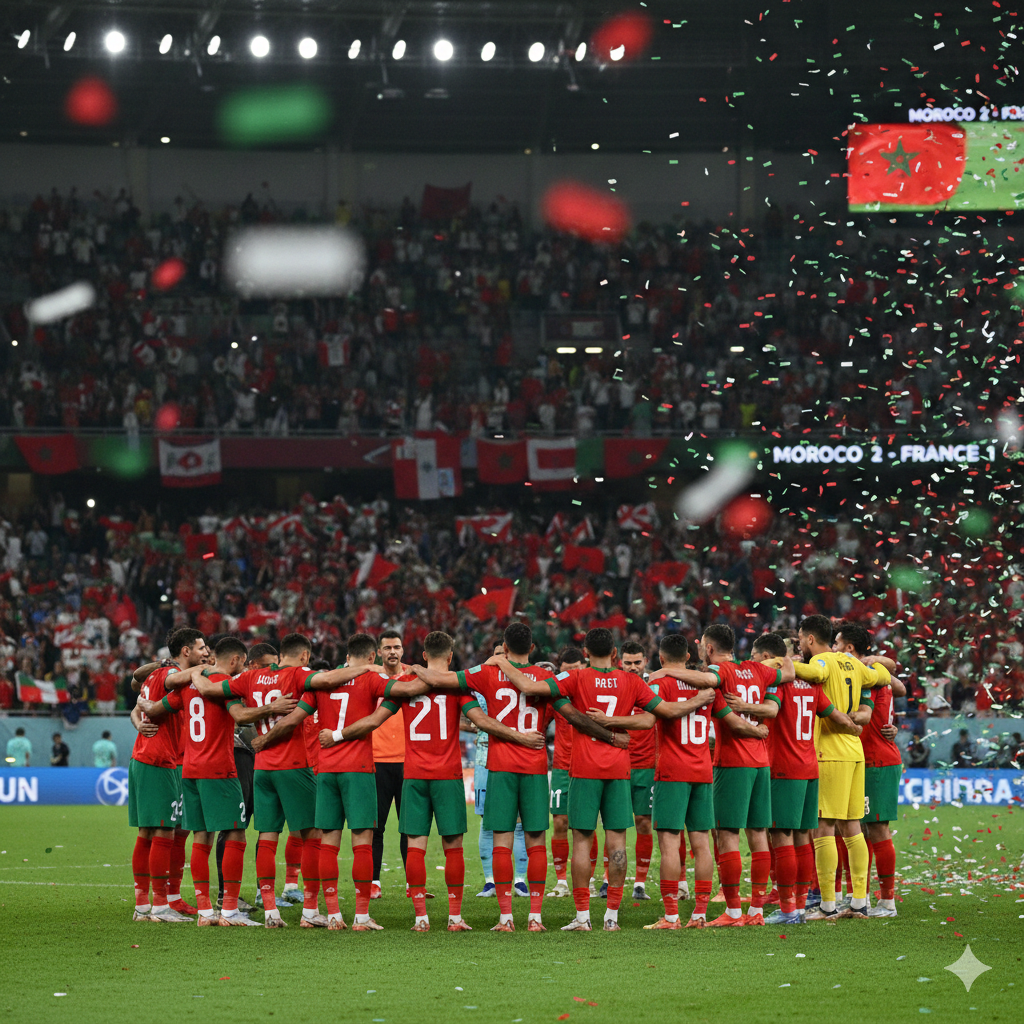
In recent decades, Moroccan players have become increasingly influential within African football. Their presence is visible not only in national team performances but also across domestic leagues, continental competitions, and major international championships. This growing influence reflects deeper transformations in African football and highlights Morocco’s particular position within this evolution.
Rather than being defined solely by individual stars, Moroccan players collectively illustrate how African football is adapting to modern tactical, physical, and organizational demands.
The Rise of Moroccan Players on the International Stage
Moroccan footballers have progressively established themselves in competitive environments beyond their domestic league. Many now play in high-level international competitions, where they are exposed to advanced training methods, demanding tactical systems, and intense competition.
This international exposure has had a significant impact on the way Moroccan players approach the game. It has strengthened their technical consistency, decision-making speed, and ability to adapt to different playing styles. As a result, Moroccan players are often perceived as reliable and tactically aware performers within African football.
Their visibility on the international stage also contributes to changing perceptions of African players, moving away from stereotypes toward recognition of discipline, intelligence, and versatility.
Balancing Individual Talent and Collective Discipline
One of the defining characteristics of Moroccan players in modern African football is their balance between individual skill and collective responsibility. While technical ability remains essential, Moroccan players are frequently valued for their understanding of team structure and tactical roles.
This balance reflects broader trends in Moroccan football education, which emphasizes positional awareness and collective organization alongside technical development. In the context of African football, where individual brilliance has traditionally played a central role, this approach offers a complementary model focused on cohesion and efficiency.
Such qualities are particularly valuable in modern football, where tactical discipline often determines success at both club and international levels.
Moroccan Players as Cultural and Tactical Bridges
Moroccan players often act as bridges between different football cultures. Their careers frequently involve movement between domestic competitions, African tournaments, and international leagues. This experience enables them to transfer knowledge, habits, and expectations across contexts.
By combining African physical intensity with tactical frameworks learned abroad, Moroccan players contribute to the evolution of playing styles within African football. Their influence extends beyond performance, shaping preparation standards, professionalism, and game intelligence.
This role as cultural and tactical intermediaries reinforces Morocco’s broader impact on the modern African football landscape.
Contribution to the Evolution of African Football
The growing presence of Moroccan players in influential roles reflects the broader modernization of African football. Improved training structures, increased international mobility, and greater tactical awareness are redefining how the game is played on the continent.
Moroccan players exemplify this shift. They represent a generation of footballers shaped by structured development systems and international exposure, capable of competing in diverse environments without losing their football identity.
Their success encourages investment in youth development and reinforces the importance of long-term planning within African football institutions.
National Team Influence and Continental Perception
At the national team level, Moroccan players contribute to shaping expectations surrounding African football competitiveness. Performances in major tournaments highlight the capacity of African teams to combine organization, adaptability, and ambition.
These performances influence how African football is perceived globally, demonstrating that tactical preparation and collective discipline can coexist with creativity and intensity. Moroccan players, through their consistency and professionalism, play a central role in this evolving narrative.
Moroccan players are playing an increasingly significant role in shaping modern African football. Their influence extends beyond individual achievements, reflecting broader transformations in training, tactics, and professionalism across the continent.
By balancing technical ability, tactical intelligence, and international experience, Moroccan players embody a modern approach to African football—one that values structure as much as creativity. As African football continues to evolve, their contribution will remain an important reference point for understanding the game’s future direction.
Répondre à What Makes Moroccan Football Unique in Africa? – Morocco Football Tribune Annuler la réponse