⚡ 30-Second Summary
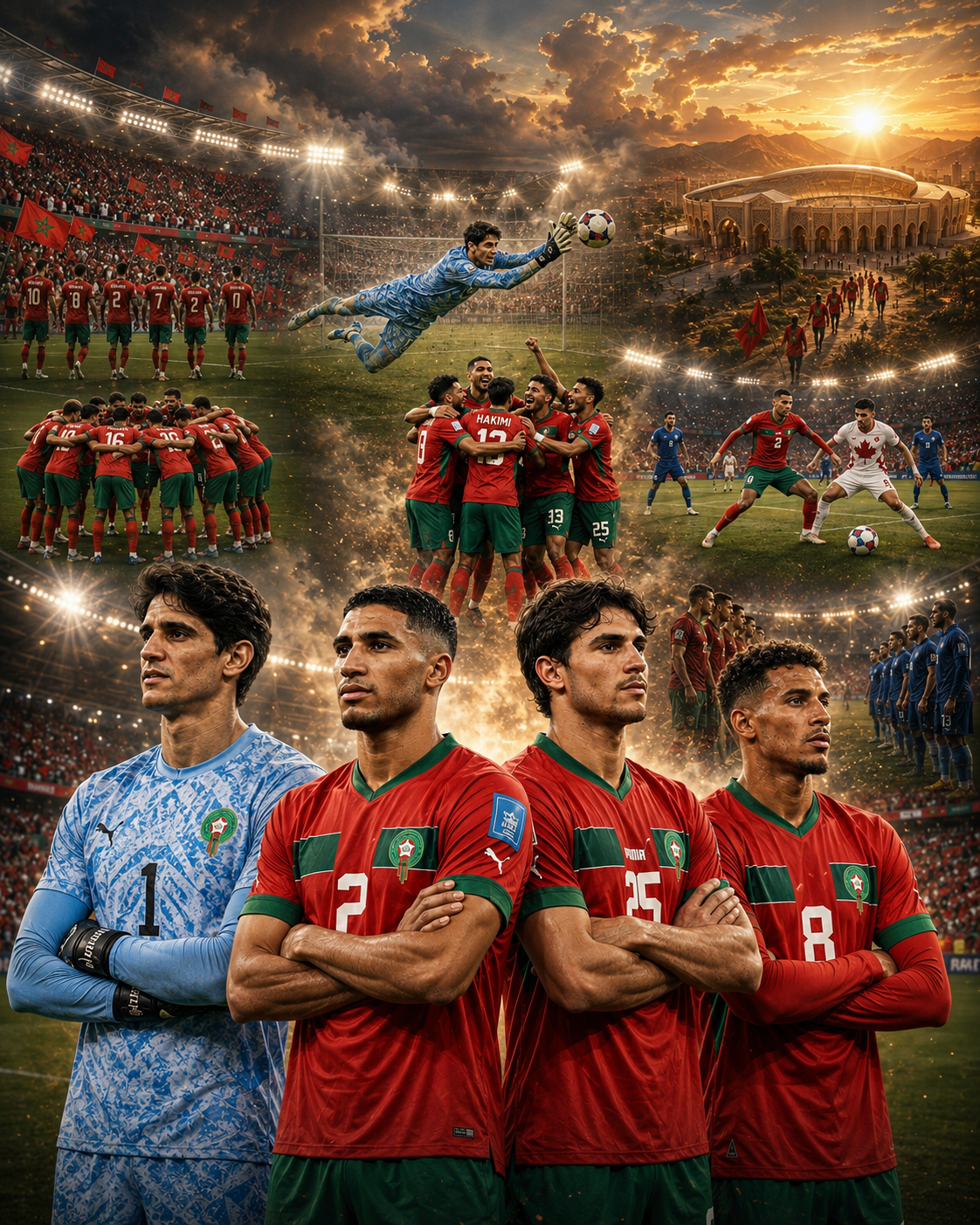
Morocco’s World Cup 2026 campaign produced another historic chapter in the story of the Atlas Lions. From navigating a demanding group stage to eliminating the Netherlands and Canada before falling to France in the quarter-finals, Morocco once again proved that its success is built on consistency rather than surprise.
This article revisits the ten defining moments that shaped Morocco’s journey, highlighting the tactical decisions, emotional turning points and performances that confirmed the Atlas Lions as one of international football’s leading national teams.
🧠 Think You Remember Every Moment?
Read the complete story of Morocco’s FIFA World Cup 2026 campaign, then challenge yourself with our interactive quiz at the end of the article.
✔ MFT Fact Check
- Morocco qualified from Group C at the FIFA World Cup 2026.
- The Atlas Lions eliminated the Netherlands on penalties in the Round of 32.
- Morocco defeated Canada 3–0 in the Round of 16.
- France eliminated Morocco 2–0 in the quarter-finals.
- The tournament represented Morocco’s second consecutive deep World Cup run after the historic semi-final in 2022.
Introduction
When historians look back at Morocco’s FIFA World Cup 2026 campaign, they may not remember only the final score against France.
Instead, they will remember a tournament that confirmed a profound transformation.
The Atlas Lions entered the competition carrying expectations that had never existed before. Four years earlier, Morocco had become the first African nation to reach a FIFA World Cup semi-final. In 2026, the challenge was no longer to surprise the football world.
It was to prove that success could be repeated.
That difference changed everything.
Opponents prepared differently. Supporters expected more. Every match carried the weight of history.
Morocco ultimately reached another World Cup quarter-final, defeating the Netherlands in one of the tournament’s most dramatic knockout matches before producing a commanding victory over Canada. Although France eventually ended the Atlas Lions’ journey, the campaign strengthened Morocco’s reputation as one of the world’s most consistent international teams.
The greatest tournaments are rarely defined by one match.
They are built through decisive moments.
Some happen on the pitch.
Others occur in the dressing room, during tactical adjustments or inside the minds of players who refuse to panic when everything appears to be slipping away.
Looking back, ten moments stand above all the others.
Together, they explain why Morocco’s World Cup 2026 campaign will be remembered as another milestone in the country’s remarkable football evolution.
Moment 1 — Morocco Opens the Tournament with Confidence
Every successful World Cup begins with belief.
Morocco’s opening group-stage performances immediately demonstrated that the Atlas Lions had arrived with confidence rather than fear. There was no evidence of a team intimidated by expectations.
Instead, Morocco played with the calm authority usually associated with experienced tournament contenders.
The defensive organisation remained disciplined.
The midfield controlled the rhythm of possession.
Transitions were executed with patience instead of desperation.
Perhaps most importantly, the players looked comfortable carrying the pressure that accompanies success.
In previous generations, Morocco often entered major tournaments hoping to compete.
This squad expected to compete.
That psychological difference became visible from the opening whistle of the campaign.
Rather than protecting the legacy of 2022, the Atlas Lions appeared determined to build upon it.
Our detailed review of how Morocco qualified for the FIFA World Cup 2026 knockout stage explains how those early performances laid the foundations for another deep tournament run.
Moment 2 — Holding Their Nerve During the Group Stage
Group-stage football rewards consistency more than brilliance.
Every point matters.
Every tactical adjustment influences qualification.
Every mistake can change an entire tournament.
Morocco approached the group phase with remarkable maturity. Readers interested in the qualification race can also explore our Morocco Group C Standings analysis.
Rather than chasing spectacular victories, the Atlas Lions demonstrated the qualities that have become synonymous with modern Moroccan football:
- defensive balance;
- intelligent pressing;
- emotional control;
- efficient game management.
These characteristics prevented panic even when matches became difficult.
Elite national teams rarely dominate every opponent.
Instead, they understand when to accelerate, when to slow the tempo and when protecting a result becomes the smartest tactical decision.
Morocco displayed exactly those qualities throughout Group C.
By the end of the group stage, qualification no longer looked like an extraordinary achievement.
It felt like the natural consequence of a team performing at its expected level.
That may have been one of the biggest changes since Qatar 2022.
Success had become normal.
Moment 3 — Eliminating the Netherlands
Every World Cup produces one match that defines a team’s identity.
For Morocco in 2026, that match came against the Netherlands.
Few knockout games combined so many different emotions.
The Dutch opened the scoring.
Morocco refused to panic.
The Atlas Lions gradually regained control before forcing extra time.
After 120 minutes, the contest moved to penalties.
There, Yassine Bounou once again demonstrated why he has become one of international football’s great tournament goalkeepers.
Morocco eventually won the shootout 3–2.
The victory meant far more than simple qualification.
It demonstrated resilience.
It confirmed tactical discipline.
Most importantly, it showed that Morocco had developed the mentality required to survive football’s most unforgiving situations.
Penalty shootouts rarely reward luck alone.
They reward preparation, emotional control and absolute concentration.
Morocco possessed all three.
Our complete Morocco vs Netherlands Match Report explains how the Atlas Lions overcame one of the tournament’s strongest opponents to reach the Round of 16.
Moment 4 — A Professional Victory Against Canada
The emotional intensity of eliminating the Netherlands created a different challenge.
Morocco suddenly became favourites.
Many teams struggle after an emotional victory.
The Atlas Lions did not.
Against Canada, Morocco produced one of their most complete performances of the tournament.
The defensive block remained organised.
The midfield dictated possession.
The attack converted opportunities with impressive efficiency.
Winning 3–0 required more than technical superiority.
It demanded concentration.
Professionalism.
And an ability to reset emotionally after one of the most dramatic nights of the competition.
This performance confirmed another important truth.
Morocco could now dominate matches that it was expected to win.
That ability often separates genuine contenders from talented outsiders.
Our complete Morocco vs Canada Match Report analyses the tactical adjustments that made the victory possible.
Moment 5 — France Exposed the Final Step Morocco Still Has to Take
Great tournaments are often remembered for victories.
Yet some of the most valuable lessons come from defeat.
Morocco entered the quarter-final against France believing it could continue its remarkable journey. The confidence was justified. The Atlas Lions had already eliminated the Netherlands and convincingly beaten Canada. They had once again demonstrated their ability to compete with the world’s strongest nations.
France, however, represented a different level of challenge.
Unlike previous opponents, Les Bleus combined technical quality, tactical flexibility and exceptional squad depth. They were capable of controlling long phases of possession before accelerating with devastating efficiency.
Morocco remained organised during the opening stages.
The defensive structure limited space between the lines.
The midfield worked tirelessly to reduce passing lanes.
Yassine Bounou once again produced important saves, including stopping Kylian Mbappé’s penalty before halftime.
For nearly an hour, the Atlas Lions stayed within touching distance.
Then came six decisive minutes.
France increased the tempo.
Morocco struggled to escape sustained pressure.
Two goals transformed an evenly contested match into a difficult recovery mission.
Although Morocco continued fighting until the final whistle, the quarter-final ended in a 2–0 defeat.
The result was disappointing.
The performance, however, revealed something equally important.
Morocco no longer loses because of fear.
It loses because elite opponents currently possess slightly greater control in decisive moments.
That distinction matters enormously.
Teams that fear the occasion rarely return.
Teams that lose while competing on equal terms usually continue progressing.
Readers can revisit every decisive moment in our France vs Morocco Match Report.
Moment 6 — The Tournament Confirmed Morocco’s Tactical Identity
One successful tournament can occasionally result from exceptional form.
Two consecutive deep World Cup campaigns usually indicate something much more durable.
Morocco’s greatest achievement in 2026 may not have been reaching another quarter-final.
It may have been proving that the Atlas Lions possess one of the clearest tactical identities in international football.
Throughout the competition, several characteristics appeared consistently.
Defensive Compactness
The distance between defensive and midfield lines remained remarkably disciplined.
Opponents rarely found easy central spaces.
Even technically gifted teams were often forced into wide areas.
Intelligent Pressing
Rather than pressing continuously, Morocco selected specific moments to increase intensity.
This controlled approach reduced physical fatigue while maintaining defensive balance.
Quick Defensive Transitions
Whenever possession was lost, players reacted immediately.
The nearest footballers delayed counter-attacks while teammates recovered their defensive positions.
These collective reactions prevented numerous dangerous situations.
Flexible Midfield
Morocco’s midfield adapted intelligently according to the opponent.
Sometimes the emphasis was controlling possession.
Other matches demanded vertical progression.
Against stronger opponents, defensive discipline became the priority.
This tactical flexibility reflected the growing maturity of the entire squad.
Our earlier tactical feature, Morocco’s Tactical Approach in African Football, explains how these principles have developed over recent years.
The World Cup simply confirmed their effectiveness against elite international opposition.
Moment 7 — Morocco Earned Global Respect
Perhaps the tournament’s biggest success cannot be measured by statistics.
It can be measured by perception.
In 2022, many observers described Morocco as football’s surprise package.
By 2026, that language had disappeared.
Opponents prepared carefully.
Journalists discussed Morocco alongside established football powers.
Managers openly praised the Atlas Lions’ tactical organisation.
Players repeatedly acknowledged Morocco’s quality before kickoff.
Respect replaced curiosity.
That evolution represents one of the strongest indicators that Morocco has entered a new era.
Elite football nations are not defined only by trophies.
They are recognised because opponents understand exactly how difficult they are to defeat.
The Netherlands prepared extensively.
Canada approached Morocco with caution despite being considered underdogs earlier in the tournament.
France described Morocco as one of its most demanding tests before the quarter-final.
These reactions demonstrate a profound change in international football’s perception of Morocco.
Respect changes tournaments.
Opponents become more cautious.
Matches become tighter.
Victories become harder to obtain.
Ironically, becoming stronger often makes future success more difficult because nobody underestimates you anymore.
This is the challenge every elite nation eventually faces.
Morocco has now entered that group.
A Campaign Built on Consistency Rather Than Emotion
One remarkable feature of Morocco’s World Cup journey was its emotional stability.
International tournaments often produce dramatic swings.
One victory creates euphoria.
One defeat creates panic.
Morocco largely avoided those extremes.
After qualifying from Group C, celebrations remained measured.
Following the dramatic penalty shootout against the Netherlands, players quickly refocused on Canada.
Even after elimination by France, the public discussion centred on progress rather than collapse.
This emotional maturity reflects the evolution of Moroccan football.
The project has become larger than any individual tournament.
One result no longer defines the future.
Instead, each competition contributes another chapter to a long-term story that stretches toward the FIFA World Cup 2030.
That broader perspective may prove to be Morocco’s greatest competitive advantage over the coming decade.
What the World Learned About Morocco in 2026
By the end of the tournament, several conclusions had become impossible to ignore.
Morocco can consistently reach the knockout stages.
Qualification is no longer viewed as an exceptional achievement.
It has become an expectation.
Morocco can defeat elite European opponents.
Victories against the Netherlands demonstrated that the Atlas Lions can eliminate traditional football powers under maximum pressure.
Morocco possesses world-class leadership.
Experienced players guided younger teammates through difficult moments without allowing panic to spread.
Leadership became visible through behaviour rather than speeches.
Morocco’s football project extends beyond one generation.
The success achieved in 2022 did not disappear four years later.
Instead, it evolved into another deep tournament run.
That continuity suggests institutional strength rather than temporary inspiration.
Morocco has become Africa’s international benchmark.
Although many African nations continue progressing, Morocco has established itself as the continent’s most consistent performer on football’s biggest stage.
That status now brings additional responsibility.
Future tournaments will begin with higher expectations than ever before.
🧠 MFT Insight
The defining achievement of Morocco’s FIFA World Cup 2026 campaign was not reaching another quarter-final. It was proving that the Atlas Lions now possess repeatable excellence.
Great football nations are recognised by consistency rather than isolated miracles. Morocco’s performances in both 2022 and 2026 suggest that the country’s rise is now supported by tactical identity, player development and institutional stability.
Moment 8 — A New Generation Stepped Forward
One of the strongest indicators of a successful football nation is not simply winning matches.
It is preparing the next generation before the current one begins to decline.
Throughout the 2026 FIFA World Cup, Morocco demonstrated that its future extends far beyond the players who captured global attention in Qatar four years earlier.
Experienced leaders remained essential.
Their composure, tournament experience and tactical understanding continued to guide the team through high-pressure situations.
At the same time, younger players accepted greater responsibility with remarkable confidence.
Instead of relying on individual brilliance, Morocco benefited from a squad where every player understood his role within the collective system.
That balance between experience and youth has become one of Moroccan football’s greatest strengths.
It reduces dependence on any single generation while ensuring continuity from one tournament to the next.
Countries that remain competitive over decades rarely replace an entire squad overnight.
They introduce new talent gradually, allowing younger footballers to learn alongside established internationals before eventually becoming leaders themselves.
Morocco appears to be following exactly that model.
The result is a national team capable of renewing itself without sacrificing performance.
Our analysis of what Morocco’s World Cup 2026 run tells us about the future of the Atlas Lions explores this transition in greater depth.
Moment 9 — Moroccan Supporters Once Again Became One of the Tournament’s Greatest Stories
Football tournaments are remembered for goals.
But they are also remembered for atmosphere.
Once again, Moroccan supporters transformed stadiums into seas of red and green.
From the group stage to the quarter-finals, thousands of fans travelled across North America to support the Atlas Lions.
Others followed from Morocco, Europe, Africa and the Middle East.
The result was a unique international community united by football.
Supporters created spectacular visual displays.
National flags filled the stands.
Traditional songs echoed around stadiums.
Every Moroccan goal triggered unforgettable celebrations.
Even neutral spectators frequently praised the passion displayed by the Atlas Lions’ fanbase.
This relationship between team and supporters has become an essential part of Morocco’s football identity.
The players consistently acknowledged that energy after every match.
Several footballers described the crowd as an additional source of motivation during difficult moments.
International tournaments often create emotional connections between teams and supporters.
Morocco has now achieved that connection across consecutive World Cups.
The country’s football culture has become one of its greatest competitive advantages.
It inspires players.
It attracts global admiration.
And it reinforces Morocco’s image as one of world football’s most passionate nations.
Moment 10 — The Quarter-Final Was Not the End of the Story
Every tournament ends.
Every football nation eventually leaves the competition.
The real question is what remains afterwards.
For Morocco, the answer is simple.
Momentum.
The quarter-final defeat against France did not erase everything achieved during the previous weeks.
Instead, it highlighted how far the national team has progressed since earlier generations struggled simply to qualify for major tournaments.
Reaching consecutive deep World Cup runs changes expectations permanently.
Young Moroccan footballers now grow up believing that quarter-finals—and perhaps even semi-finals—are realistic objectives rather than impossible dreams.
That cultural shift may become one of the most important legacies of the 2026 campaign.
Football success is rarely built through one extraordinary tournament.
It emerges through repeated performances that reshape a nation’s confidence.
Morocco has now demonstrated that its achievements are sustainable.
The Atlas Lions are no longer chasing history.
They are writing it.
Beyond Results: The Legacy of World Cup 2026
Statistics tell only part of Morocco’s story.
Wins, losses and goals provide measurable evidence of progress.
The deeper legacy lies elsewhere.
Confidence
Perhaps the greatest transformation is psychological.
Players no longer approach elite opponents hoping to compete.
They expect to compete.
That mindset changes preparation, decision-making and performance under pressure.
Confidence has become one of Morocco’s most valuable tactical assets.
Credibility
International football now views Morocco differently.
Analysts discuss the Atlas Lions as genuine contenders.
Opposing coaches devote significant preparation to neutralising Morocco’s strengths.
This credibility has been earned through consistent performances rather than isolated surprises.
Continuity
Many successful national teams experience one exceptional generation before declining.
Morocco appears determined to avoid that pattern.
The federation has continued investing in coaching, youth academies and long-term player development.
That institutional commitment increases the likelihood of sustained success.
Inspiration
The impact of Morocco’s World Cup journey extends beyond professional football.
Children throughout the country watched another generation compete confidently against some of the world’s strongest teams.
Many will dream of representing Morocco in future tournaments.
Some will eventually make that dream a reality.
This inspirational effect may ultimately prove more important than any individual result.
Why 2026 Strengthened Morocco’s Global Football Identity
Identity cannot be created through marketing campaigns.
It develops through repeated actions.
Across the 2026 FIFA World Cup, Morocco consistently displayed the qualities that now define its football culture.
Those qualities include:
- Tactical intelligence.
- Defensive discipline.
- Emotional resilience.
- Collective responsibility.
- Respect for the opponent.
- Pride in representing the nation.
Together, these characteristics have become synonymous with the Atlas Lions.
They explain why Morocco continues earning admiration from supporters around the world.
They also explain why future opponents will prepare even more carefully.
Success changes expectations.
Morocco now competes with those expectations rather than against them.
That is one of the clearest signs that the Atlas Lions have joined football’s elite.
🌍 MFT Insight
The lasting legacy of Morocco’s World Cup 2026 campaign is not measured solely by reaching another quarter-final. It lies in the transformation of expectations. Across the football world, Morocco is no longer viewed as an outsider capable of occasional surprises. The Atlas Lions are now recognised as a nation expected to compete deep into major international tournaments.
That shift in perception may be the campaign’s greatest victory—and the foundation for even greater ambitions ahead of the 2030 FIFA World Cup.
Looking Ahead
As attention gradually turns toward the next cycle of international football, Morocco finds itself in a position few African nations have ever occupied.
The challenge is no longer proving that success is possible.
It is sustaining excellence.
Maintaining high standards will require continued investment in youth development, coaching, sports science and tactical innovation.
It will also require balancing experienced leaders with emerging talent capable of carrying the project forward.
The road to 2030 has already begun.
The foundations are stronger than ever.
And if the lessons of 2026 are applied wisely, Morocco’s most memorable World Cup performances may still lie ahead.
Conclusion — A Campaign That Changed Expectations Forever
Every FIFA World Cup leaves behind unforgettable images.
For Morocco, the 2026 tournament will be remembered for the composure of Yassine Bounou, the resilience shown against the Netherlands, the controlled victory over Canada and the extraordinary support that followed the Atlas Lions across North America.
Yet the campaign’s most important legacy cannot be reduced to one save, one goal or one result.
It changed expectations.
Morocco no longer enters a major tournament simply hoping to survive the group stage. The Atlas Lions now arrive expecting to reach the knockout rounds, challenge established football nations and remain competitive deep into the tournament.
That transformation represents one of the greatest achievements of Morocco’s modern football era.
The historic semi-final run in 2022 introduced Morocco to the world as a potential new force. The 2026 quarter-final campaign confirmed that the previous success was not an isolated miracle.
It was evidence of a stronger football system.
Morocco’s progress has been built through long-term planning, improved player development, tactical discipline, modern infrastructure and the ability to connect footballers from Morocco and the international diaspora around one national project.
The tournament also revealed that another step remains.
Defeating elite opposition once is possible through courage and organisation. Competing for major trophies across multiple tournaments demands greater squad depth, more attacking variety and the ability to control decisive moments against the strongest teams in the world.
The defeat against France exposed those final margins.
It did not invalidate Morocco’s progress.
It clarified the next objective.
With the 2030 FIFA World Cup approaching, Morocco has an opportunity that extends far beyond hosting matches. The country can use the next four years to strengthen academies, modernise domestic football, develop coaches and prepare another generation capable of competing at the highest level.
The Atlas Lions have already proved that they belong in the conversation surrounding world football’s leading nations.
The challenge now is no longer earning respect.
It is transforming that respect into trophies.
Morocco’s 10 Defining World Cup 2026 Moments
The performances, decisions and emotional turning points that shaped the Atlas Lions’ campaign.
Morocco began the tournament with the authority of an established contender.
The Atlas Lions managed difficult moments without losing tactical balance.
Morocco survived 120 minutes before winning the penalty shootout.
A controlled performance confirmed Morocco’s ability to succeed as favourites.
The quarter-final revealed the final margins separating Morocco from the best.
Compact defending and intelligent pressing remained central throughout.
Opponents approached Morocco as a genuine international football power.
A new generation accepted responsibility alongside experienced leaders.
Moroccan fans created one of the tournament’s strongest identities.
The quarter-final became a foundation for Morocco’s next football cycle.
📌 Key Takeaways
- Morocco produced another deep FIFA World Cup campaign after the historic achievement of 2022.
- The victory over the Netherlands demonstrated resilience, preparation and emotional control under maximum pressure.
- The performance against Canada showed that Morocco can manage the responsibility of being expected to win.
- The quarter-final against France exposed the small margins still separating the Atlas Lions from the world’s strongest teams.
- Morocco’s tactical identity is now recognisable across different opponents and match situations.
- Younger players gained valuable tournament experience alongside established leaders.
- Moroccan supporters reinforced the country’s powerful and increasingly global football identity.
- The 2026 campaign strengthened the foundations of Morocco’s long-term ambitions ahead of 2030.
What Morocco Proved at the FIFA World Cup 2026
Six conclusions that explain why the Atlas Lions are no longer viewed as tournament outsiders.
Consistency
A second consecutive deep run confirmed that Moroccan success can be repeated.
Resilience
The team remained composed when matches became emotionally and tactically difficult.
Tactical Maturity
Morocco adapted its structure according to the strengths of each opponent.
Squad Continuity
Experienced leaders and emerging players operated inside the same collective system.
Global Credibility
Elite opponents prepared for Morocco with the respect reserved for major contenders.
Future Potential
The campaign provided a stronger platform for the national project leading toward 2030.
Frequently Asked Questions
Did Morocco improve on its 2022 World Cup performance?
Morocco did not surpass its historic semi-final appearance from 2022. However, reaching another deep knockout round confirmed that the Atlas Lions can maintain a high international level across multiple tournament cycles.
What was Morocco’s defining moment at the 2026 World Cup?
The penalty shootout victory over the Netherlands was the campaign’s defining moment. It demonstrated Morocco’s resilience, tactical discipline and ability to remain composed under extreme pressure.
Why was the victory against Canada so important?
The Canada match showed that Morocco could handle the pressure of being favourites. The Atlas Lions controlled the contest and delivered a professional performance after an emotionally demanding victory over the Netherlands.
What did Morocco learn from the defeat against France?
The quarter-final showed that Morocco must continue improving its squad depth, attacking flexibility and ability to manage short decisive periods against elite opponents.
Can Morocco challenge for the FIFA World Cup in 2030?
Morocco should enter the 2030 cycle with considerable ambition. Competing for the trophy will require continued investment, tactical development and the successful integration of another generation of players.
Morocco’s World Cup Evolution
From historic breakthrough to confirmation—and toward the responsibility of hosting in 2030.
Breakthrough
Morocco became the first African nation to reach a World Cup semi-final.
Confirmation
Another deep campaign proved that Morocco’s rise was built on repeatable qualities.
Responsibility
Hosting creates an opportunity to transform sustained progress into a historic national objective.
🧠 Morocco World Cup 2026 Quiz
How closely did you follow the Atlas Lions’ campaign? Answer the five questions below and check your score.
Continue Reading
Explore more Morocco Football Tribune analysis from the FIFA World Cup 2026.
Join the Conversation
What was the defining moment of Morocco’s FIFA World Cup 2026 campaign?
- The dramatic victory over the Netherlands?
- The professional performance against Canada?
- The tactical consistency shown throughout the tournament?
- Or the lessons learned from the quarter-final against France?
Share your opinion in the comments and join the discussion with fellow supporters of the Atlas Lions.
Editorial Note
Morocco Football Tribune is committed to producing detailed, independent and evidence-based coverage of Moroccan football.
Our analysis combines verified match information, tactical observation and historical context to help readers better understand the development of the Atlas Lions and Morocco’s growing position in international football.
Sources
- FIFA — Official tournament information and match data.
- Morocco Football Tribune — FIFA World Cup 2026 match reports and tactical analysis.
- Post-match statistics and tournament observations compiled during Morocco’s campaign.
- Official team communications and verified competition reporting.
Leave a Reply