
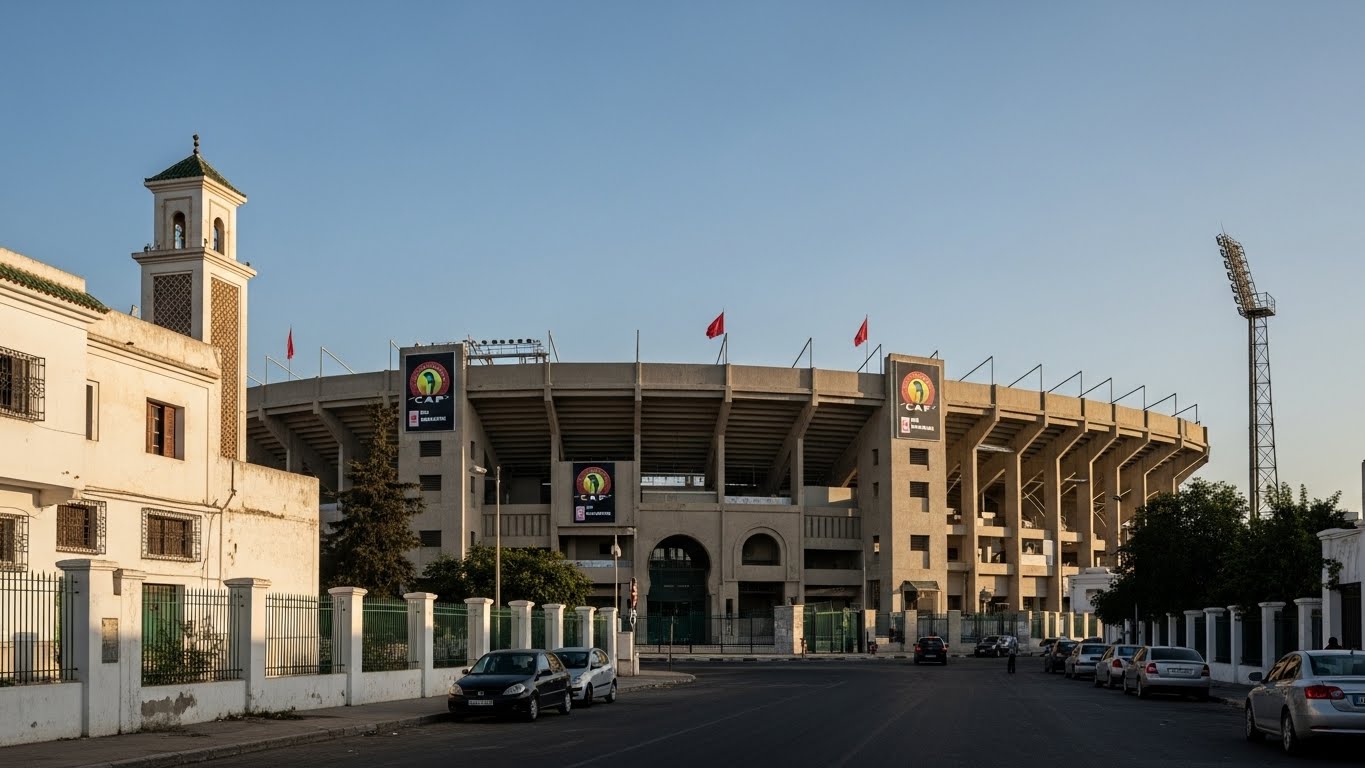
As the Africa Cup of Nations 2025 unfolds in Morocco, the country’s role as host is being read not only in the present, but against the long memory of the tournament. Every edition of AFCON creates its own atmosphere, yet each also reflects how hosting has evolved across decades. This historical lens adds depth to the pressure of hosting that Morocco currently experiences.
Hosting as a Changing Practice
Early editions of AFCON were shaped by limited infrastructure, regional travel, and modest global exposure. Hosting meant providing a stage, but expectations remained contained. Over time, the tournament has grown into a continental media event, transforming how host nations are evaluated.
AFCON 2025 takes place within this expanded context. What is now expected from Morocco — in terms of facilities, coordination, and image — is the product of decades of institutional evolution. This makes today’s hosting far more complex than it was in earlier editions.
From Organization to Institutional Maturity
Modern AFCON tournaments are no longer judged only by matches, but by how systems function. Transport networks, security, broadcasting, and public space management now shape perceptions as much as football itself. Morocco’s experience reflects the broader shift from simple organization to institutional performance.
This transformation is visible in the way organizational structures now operate as central elements of hosting rather than background mechanisms.
Cities, Memory, and Comparison
Host cities carry the memory of previous tournaments. Urban spaces, transport hubs, and public squares accumulate layers of football history that shape how new editions are experienced. AFCON 2025 unfolds within this accumulated memory, even when it is not consciously referenced.
This living memory is embedded in the national environment shaped by the tournament, where past editions quietly inform how current hosting is perceived.
Rules and Continuity Across Editions
While atmospheres change, the framework of the competition provides continuity. Rules, institutional standards, and procedural consistency allow AFCON to evolve without losing coherence. Each new edition builds upon what came before.
This long-term stability operates through the same institutional framework that now shapes AFCON 2025, linking Morocco’s hosting to a broader historical lineage.
AFCON 2025 does not exist in isolation. It stands within a historical sequence of tournaments that have gradually transformed hosting into a sophisticated institutional and cultural practice. By viewing Morocco’s experience in this wider perspective, the current tournament appears not as a singular event, but as part of an evolving tradition that continues to redefine what hosting in African football means.
Laisser un commentaire