
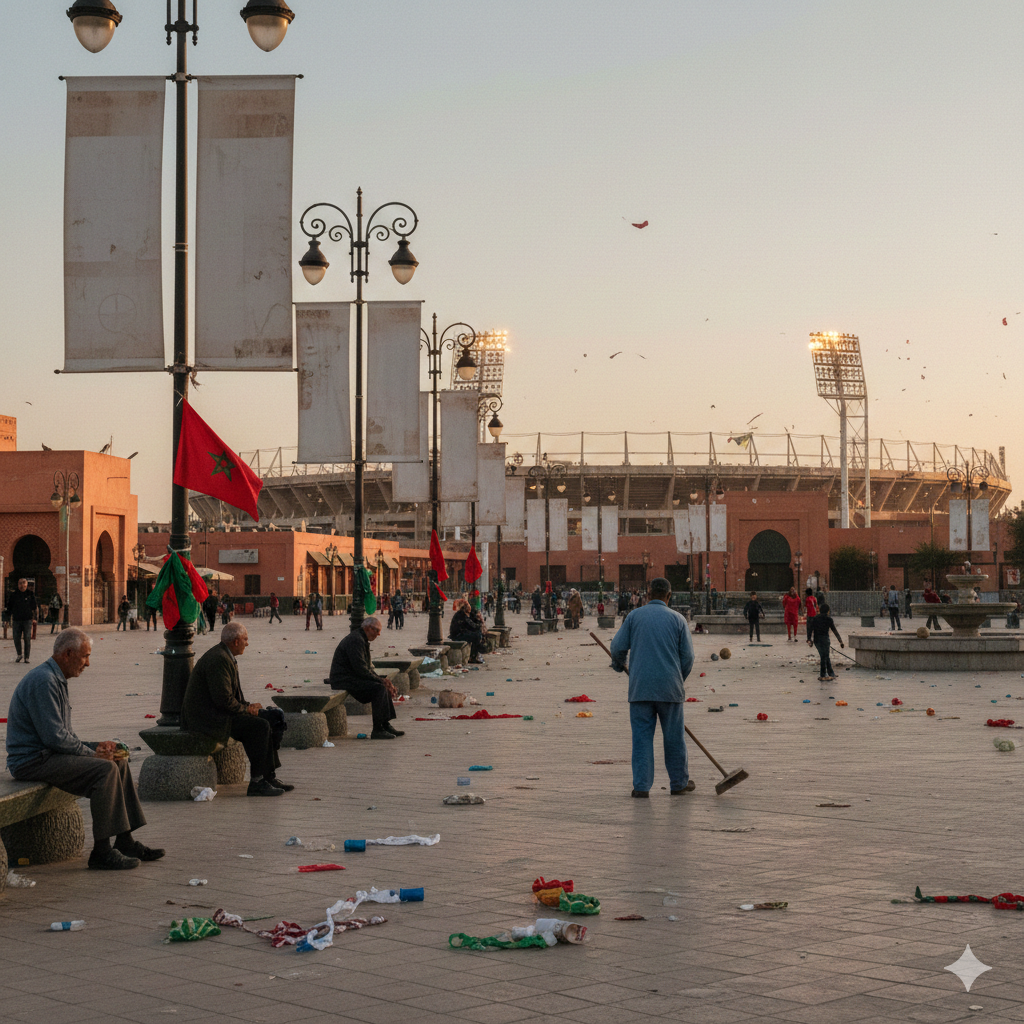
As Africa Cup of Nations 2025 continues in Morocco, the tournament is no longer only an event unfolding in real time. It is also becoming a reference point for continuity. Hosting does not end with each matchday; it reshapes how institutions, supporters, and structures relate to the future of the game. The competition is quietly producing a legacy in motion rather than a closed chapter. This evolving legacy builds on the pressure of hosting experienced throughout the tournament.
Continuity as a Process
Football heritage is often discussed after tournaments, once results are known. Yet continuity begins earlier, through the ways systems adapt while competition is ongoing. Training routines, administrative habits, and public expectations evolve under the pressure of the event itself.
It also reflects the way organizational structures adapt under sustained exposure, shaping behaviors and influencing how institutions integrate temporary demands into their routines.
AFCON 2025 is revealing continuity not as a future promise but as a present process. What persists from day to day — procedures, rhythms, and organizational memory — is already shaping what will remain once the tournament moves on.
Institutions Under Long-Term Exposure
Hosting a continental tournament places institutions under sustained observation. Decision-making, coordination, and governance do not disappear when matches end; they leave traces in how systems operate afterward.
These processes unfold within a national environment shaped by the tournament. Public perception, media narratives, and shared experiences accumulate into a reference framework that lasts beyond competition.
During AFCON 2025, institutional behaviors are becoming part of the tournament’s long-term imprint. The way challenges are handled today influences how football infrastructure and governance will function tomorrow — even without formal declarations or reforms.
The Weight of Collective Memory
A tournament does not only create statistics; it generates collective memory. Public perception, media narratives, and shared experiences accumulate into a reference framework that lasts beyond the competition itself.
All of this operates inside an institutional framework that gives continuity its form. The alignment between rules, organization, and public expectations becomes part of what the next generation remembers rather than the specific moments that make headlines.
AFCON 2025 is already contributing to this memory. Not through dramatic moments alone, but through repeated patterns of organization, visibility, and interaction between football and society.
AFCON 2025 is not only shaping immediate outcomes; it is quietly producing continuity. As the tournament unfolds, it leaves behind institutional habits, public expectations, and collective references that will influence Moroccan football long after the final whistle. In this sense, the competition is less a closed event than an ongoing chapter in a broader trajectory.
Laisser un commentaire