
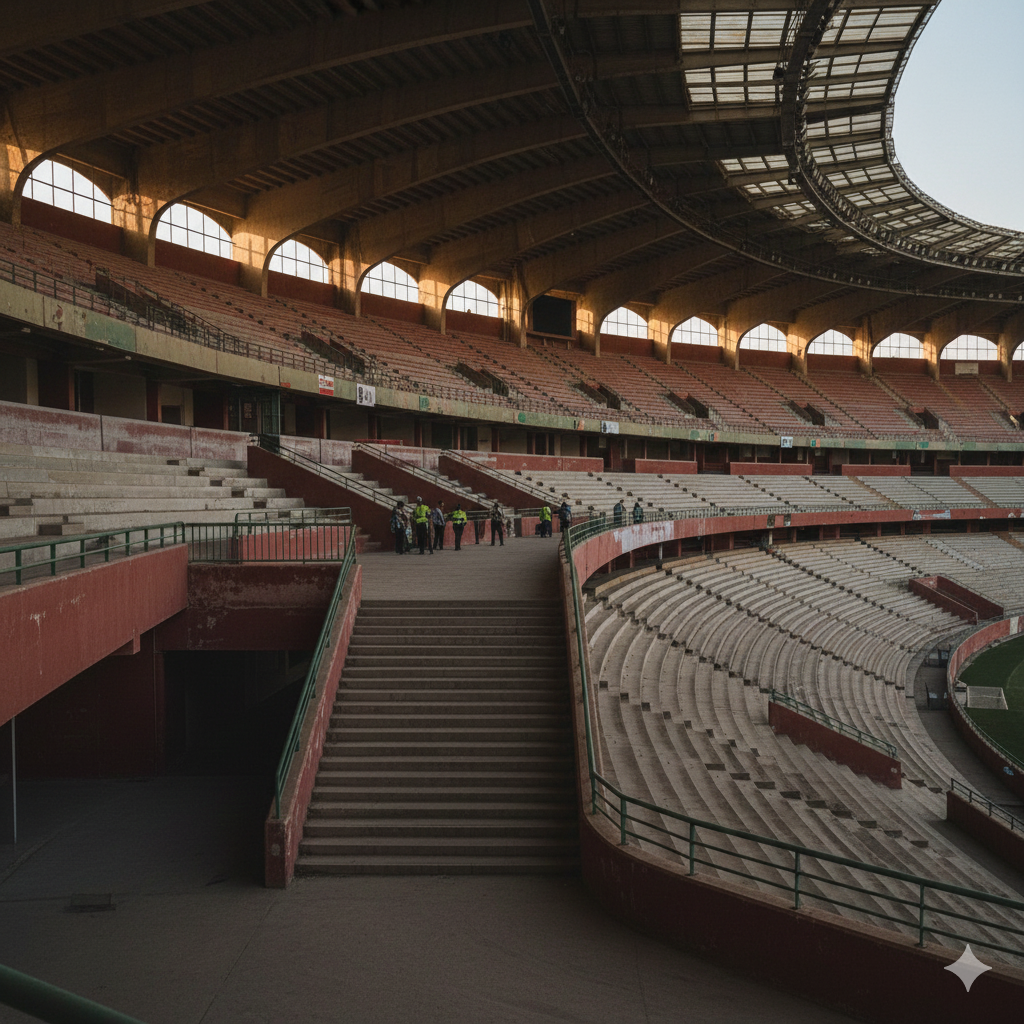
Supporters, Stadiums, and Collective Identity in African Football
As the Africa Cup of Nations unfolds, attention naturally gravitates toward results, performances, and tactical debates. Yet beyond the pitch, another dimension of African football continues to shape the tournament in quieter but equally decisive ways: the relationship between supporters, stadiums, and collective identity.
In African football, stadiums are never neutral spaces. They are places where football intersects with memory, belonging, and emotional expression. Whether the tournament is beginning, ongoing, or approaching its decisive stages, these elements remain constant. They influence how teams experience pressure, how matches are lived, and how football connects with society.
Stadiums as Social Spaces
African stadiums function as more than sporting venues. They are gathering points where local identity, national pride, and shared history converge. During a continental tournament, this role becomes more visible, but it is not created by the competition itself.
Supporters do not simply attend matches; they inhabit stadiums. Songs, gestures, silences, and collective reactions transform architecture into experience. Even when no single moment dominates headlines, the stadium shapes how football is felt rather than merely observed.
This dynamic explains why atmosphere cannot be reduced to noise. It is a form of communication, expressing expectation, impatience, encouragement, or tension — sometimes all at once.
Collective Identity Under Pressure
When a tournament is underway, identity is no longer abstract. It is tested repeatedly, through moments of control and moments of uncertainty. Supporters become participants in this process, reinforcing or destabilising emotional balance.
In African football, where proximity between teams and supporters is often strong, this interaction carries particular weight. A supportive environment can help players maintain composure. A demanding one can accelerate anxiety. Neither reaction is accidental; both emerge from shared narratives about what football represents.
Collective identity, in this sense, is not performed only by players. It is negotiated continuously between the pitch and the stands.
Emotion as a Structural Factor
Emotion is frequently portrayed as unpredictable or spontaneous. Yet within African football, it operates as a structural element. Supporter culture follows codes, rhythms, and expectations that are learned over time.
During an ongoing tournament, these emotional patterns do not disappear. They intensify. Silence can speak as loudly as celebration. Anticipation can weigh more heavily than disappointment. Understanding this emotional grammar is essential to understanding performance itself.
Teams that navigate these environments successfully are not necessarily those who generate the most noise, but those who interpret it accurately.
Beyond the Tournament
While the Africa Cup of Nations provides a concentrated moment of visibility, the relationship between supporters, stadiums, and identity extends far beyond the competition. These dynamics persist before, during, and after the tournament.
The CAN does not create collective identity; it reveals it. It brings to the surface expectations and tensions that already exist within football cultures across the continent.
In this sense, the tournament serves less as a stage than as a lens — one that allows observers to see how deeply football is embedded in social life.
Football as a Shared Experience
As the Africa Cup of Nations continues, it becomes clear that African football cannot be understood solely through tactics or results. Stadiums and supporters remain central to how the game is lived and remembered.
Collective identity does not unfold on the pitch alone. It emerges in the stands, in shared emotion, and in the silent agreements between players and supporters. Long after the tournament moves on, these relationships continue to define what football means across the continent.
Leave a Reply