
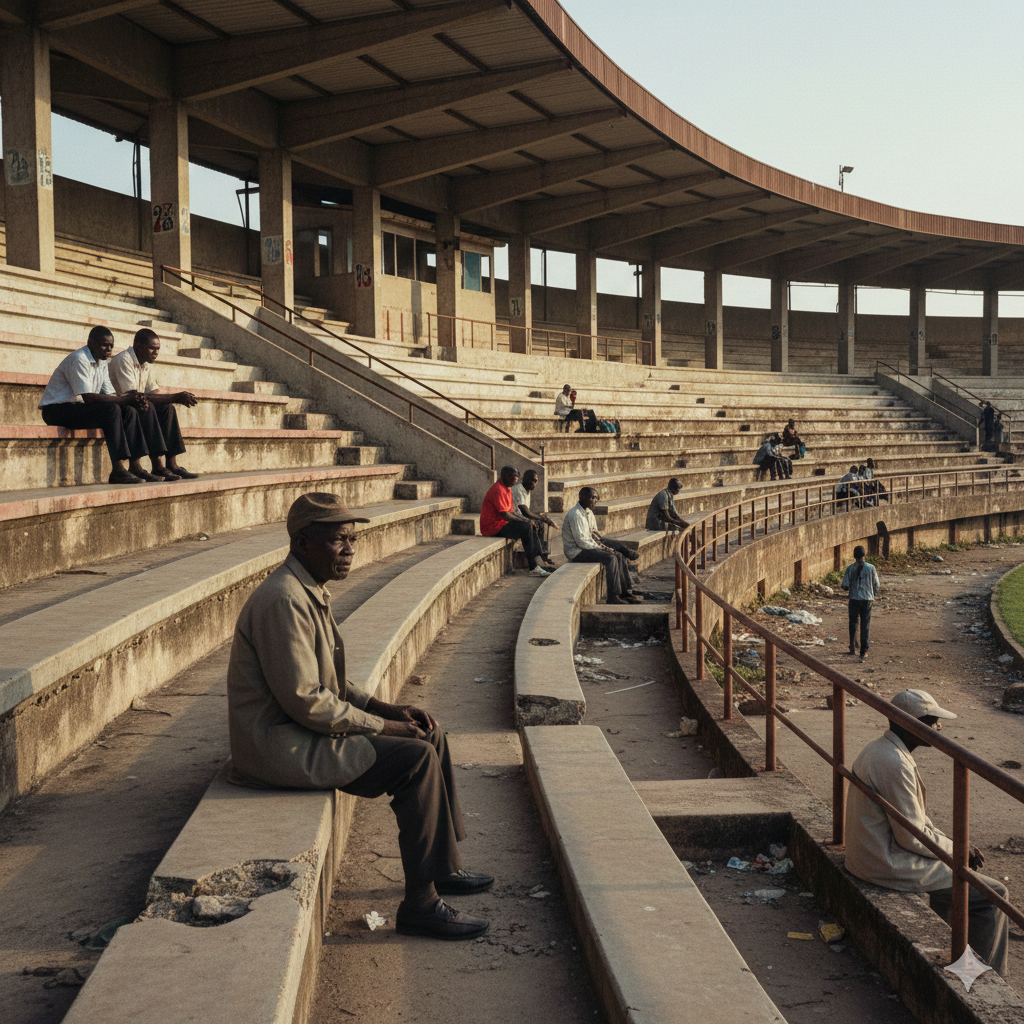
Playing at home is often described as an advantage so obvious that it barely needs explanation. Familiar surroundings, vocal supporters, and emotional connection are assumed to tilt the balance naturally. Yet in African football, home advantage is neither automatic nor uniform. It operates within a complex web of structural, emotional, and contextual factors that vary from one nation to another.
Rather than asking whether home advantage exists, a more useful question emerges: under what conditions does it actually matter? In African football, the answer lies less in geography and more in how identity, organisation, and collective behaviour interact with place.
Beyond Geography: What “Home” Really Means
In theory, playing at home offers stability. Travel is reduced, routines remain familiar, and environmental factors are controlled. In practice, however, African football presents a far more uneven landscape. Infrastructure disparities, climate variations, and logistical challenges often affect both hosts and visitors in unpredictable ways.
For some teams, home matches provide a clear reference point — a space where tactical habits and collective automatisms are reinforced. For others, the pressure of expectation outweighs any logistical comfort. Home advantage, in this sense, is not granted by location alone. It must be constructed.
The Role of Collective Identity
One of the most decisive elements shaping home advantage is collective identity. Teams that perform consistently at home tend to display a clear sense of who they are and how they want to play. This clarity allows players to interpret crowd energy as support rather than demand.
In African football, where supporter culture is often intense and emotionally expressive, this distinction is crucial. When identity is stable, atmosphere becomes a resource. When identity is fragile, the same atmosphere can become disruptive.
Home advantage therefore reflects a relationship — between players, supporters, and expectations — rather than a physical setting.
Structure Versus Emotion
African football has long been associated with emotion, spontaneity, and unpredictability. While these traits remain part of its richness, modern success increasingly depends on structure and organisation. Teams that convert home matches into consistent results often do so by maintaining tactical discipline under emotional pressure.
This balance is difficult to sustain. Moments of adversity — conceding early, missing chances, facing defensive opposition — test a team’s ability to remain patient. At home, these moments are amplified. The crowd does not merely observe; it reacts.
In such situations, home advantage belongs not to the most expressive team, but to the most emotionally balanced one.
When Home Advantage Becomes a Constraint
There are moments when playing at home becomes a burden. Expectations accumulate. Silence replaces encouragement. Every mistake feels heavier. In these conditions, players may rush decisions, abandon structure, or seek individual solutions disconnected from the collective plan.
This phenomenon is not unique to African football, but it is often more visible within it due to the proximity between teams and supporters. Home advantage, when mismanaged, exposes the psychological dimension of performance more than the tactical one.
Understanding this dynamic helps explain why some teams perform better away from home, where emotional demands are lower and roles feel clearer.
A Structural Rather Than Emotional Factor
Ultimately, home advantage in African football is less about noise and proximity than about structure. Teams that integrate supporter energy into a coherent footballing identity are more likely to benefit from playing at home. Those that rely on emotion alone often experience inconsistency.
This perspective shifts the debate. Home advantage is not a myth, but neither is it a guarantee. It is a structural factor — built through continuity, clarity, and emotional management — rather than a spontaneous outcome of location.
Rethinking a Familiar Assumption
Home advantage remains one of football’s most familiar concepts, yet in African football it deserves closer examination. Its impact depends not on where a match is played, but on how a team understands itself within that space.
By viewing home advantage as a relationship rather than a condition, it becomes possible to move beyond simplistic assumptions. In African football, the strongest home performances are rarely the loudest. They are the most controlled.
Leave a Reply